Easy Tips for Inclusion of Purees in Baby Led Feeding
5 min read • By: Gerber Medical Hub

Quick summary
Marsha Dunn Klein is a pediatric occupational therapist who specializes in infant feeding. She is an author, clinician, and an internationally known educator in the field of pediatric feeding. Marsha co-founded the Get Permission Institute, an online platform for education on infant feeding.
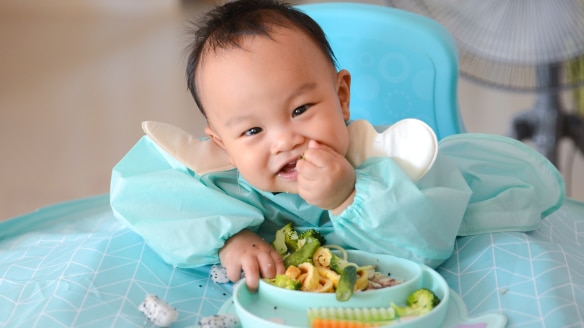
Baby led feeding is a common practice when introducing solids with new parents.1 It is a responsive, child centered approach to introducing solids that emphasizes baby participation from the start. Purees can be part of baby-led feeding when offered in a way that supports autonomy, sensory exploration, and self-feeding. They can be a valuable texture and sensory experience as babies gain skills to feed themselves solids. The article below summarizes how pediatricians can guide parents in understanding how purees can be part of the journey to solid foods.
How can infant cereals and purees be offered in ways that are baby led?
Teethers: Baby can practice bringing mouthing toys such as a TeetherHeart® to their mouth. Spread puree or infant cereal on the edge of the teether for exposure while baby is practicing hand-eye coordination and learning about food flavors.2,3
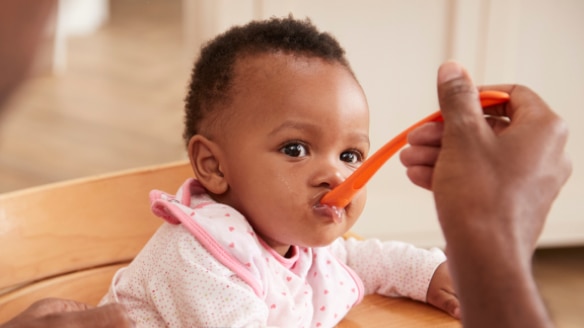
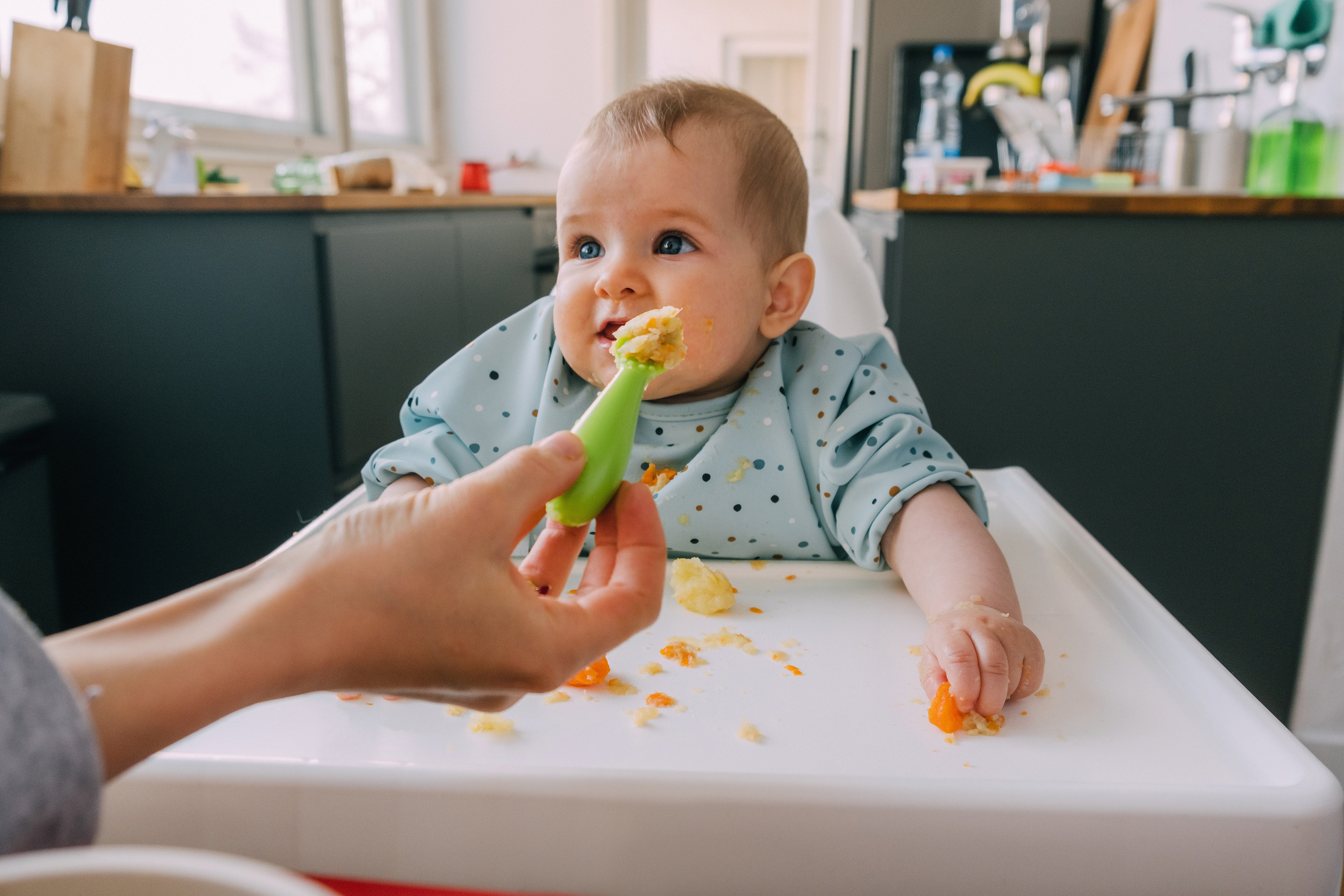
Preloaded Spoons: Purees can be offered to baby on a preloaded spoon. Dip the short, baby hand sized spoon in a first foods puree or infant cereal, offer it to the baby, and allow time for the baby to reach for the spoon. The simple pause allows baby to lead the way by reaching and then practicing getting it to their mouth.4
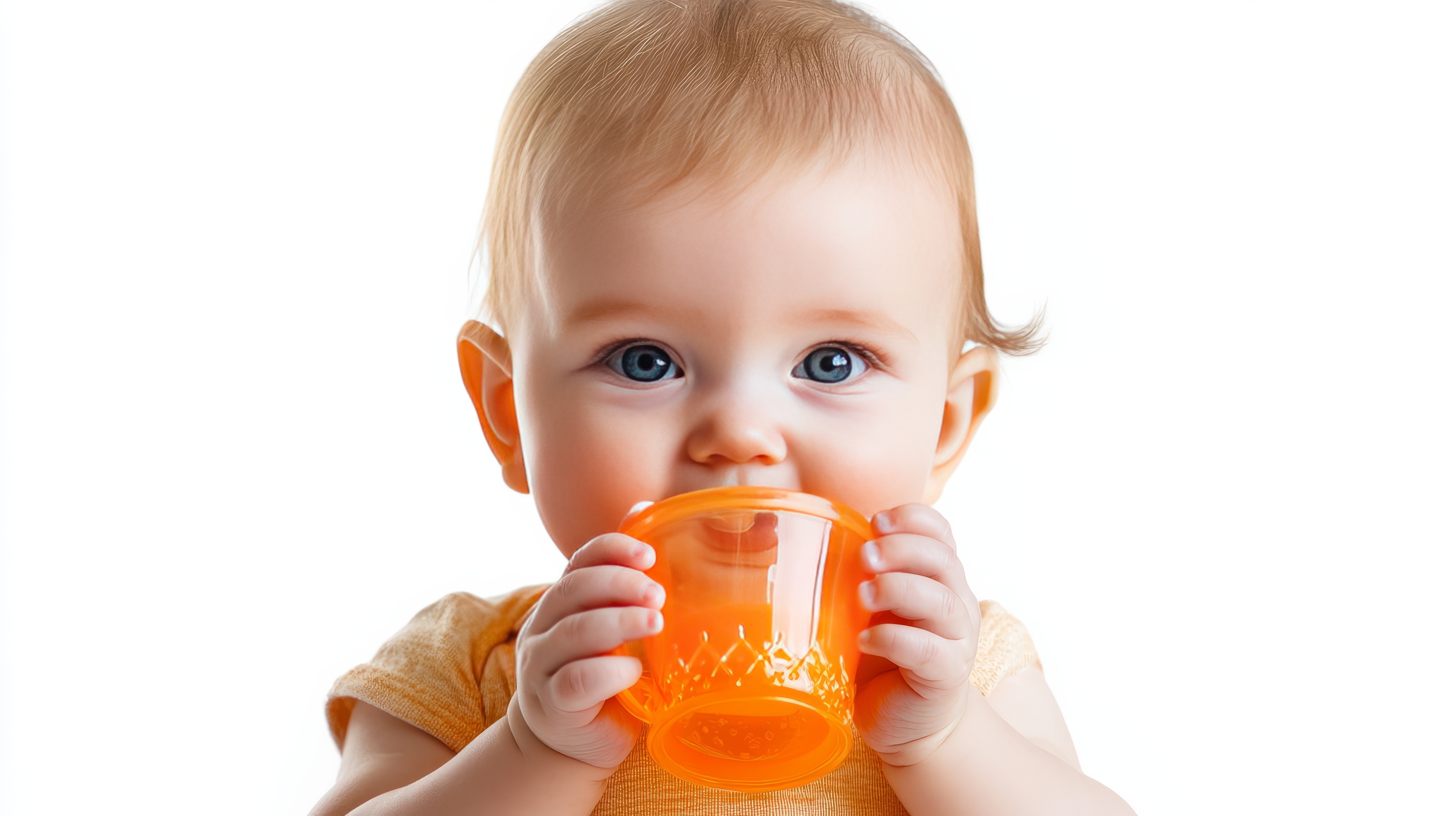
Drink the puree: Baby purees can be poured into a short, baby sized cup. The thickness of the puree slows the flow of the liquid down to help baby gain the skills of open cup drinking.4
Baby popsicles: Parents can make tiny popsicles for baby with purees. These allow baby to independently learn about flavor and self-feeding. See EZPZ tiny pops
Dip finger foods in the purees: Babies can practice dipping a soft food such as toast, pancakes, or soft cooked (squishable) veggies into purees. Using these foods as dippers encourages flavor exploration. hand to mouth coordination, and pre-spoon feeding.1,4
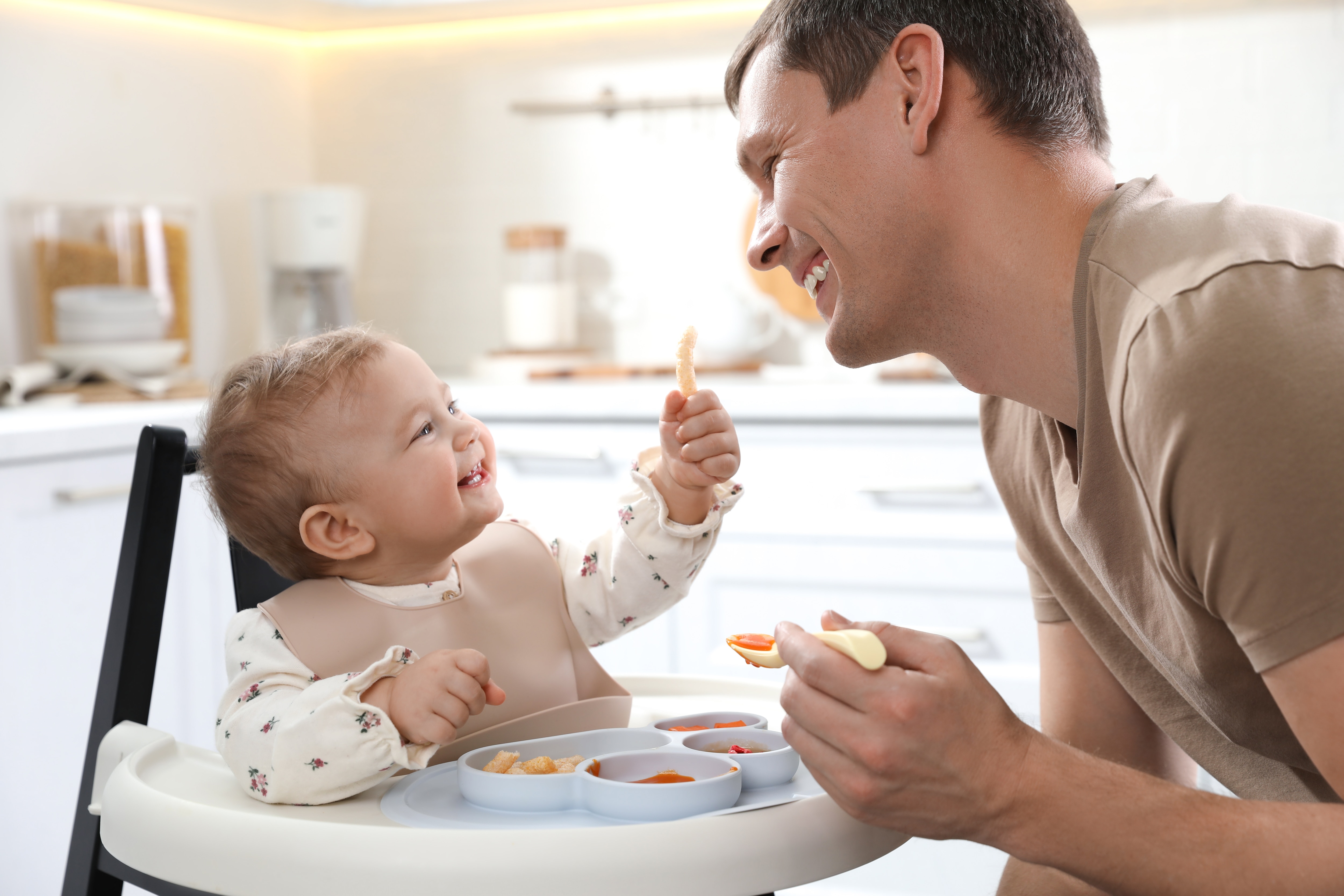
Recipes Using Gerber Foods: Purees can be used in combination with family foods to gradually increase the texture and flavor experience as baby explores self-feeding. A fruit can be swirled into oatmeal or added to cottage cheese. A vegetable puree can be added to tiny pastas or mashed beans. Purees can also be added to baby led-friendly meals, including pancakes and meatballs cut into the appropriate sizes for feeding. Find easy baby led eating options: Medical Gerber 5
It used to be that introduction to solids was all about purees until baby eventually learned to chew. Today, the focus is on partnering in a baby-led way, finding enjoyment, building skills, and learning to confidently feed themselves varied foods, including purees.
References
1Laux J, Playforth K, Scott C, Relan M, Callahan C. Baby Leads the Way: An Evidence-Based Guide to Introducing Solid Foods. American Academy of Pediatrics. 2025
2Guiley C. Why Feeding Therapists Love Food Teethers. Nourish Feeding Therapy. 2022.
3Brackett K. How to Use Purees in Feeding Therapy. Pediatric Feeding News. 2018
4Rabin J, May-Buechner G. Your Baby Can Self-Feed Too: Adapted Baby-Led Weaning for Children at Risk for Feeding Challenges. Gryphon House. 2022.
5Stacey, n.d. Baby puree recipes. My Kids Lick the Bowl. Published date not available. Accessed November 13, 2025.